
TCP COM Bridge: COM port to TCP/IP redirector for Windows
For Windows 2000 - Windows 11 (2022) (incl. Server, x86 and x64). Latest version: 1.8.3 build 515. May 15, 2026.

- Windows 2000 to 11 and Windows Server, 32 and 64-bit
- Serial device server, COM port sharing, splitting and virtual ports
- Free 21-day trial
- About 5 MB download, installs a signed virtual COM port driver
- Standard or Professional edition, per computer
What it does
TCP COM Bridge is a Windows program that connects COM ports to a TCP/IP network. It opens a real COM port and serves its data on a TCP or UDP port, and it creates virtual COM ports whose data travels over the network. A program that knows only COM ports can then work with a device on another computer, behind a hardware device server or across the Internet. Every connection works as a TCP server or as a TCP client, and the data passes through unchanged.
What you can do with it
Open the COM port of another computer as if it were a local one. Give a COM-only program a virtual port that leads to a device server or a Wi-Fi gateway. Let several programs read one serial device at the same time. Share one device between several computers. Turn a PC with many ports into a serial device server that runs as a Windows service. Replace the slow COM port redirection of remote desktop sessions with a dedicated link.
One end or both. The other end of a link can be a second copy of TCP COM Bridge or anything that speaks raw TCP: a hardware device server, a gateway, a program with a socket. The RFC 2217 protocol is not supported, so the baud rate of a third-party device server is set in the device server itself.Getting started
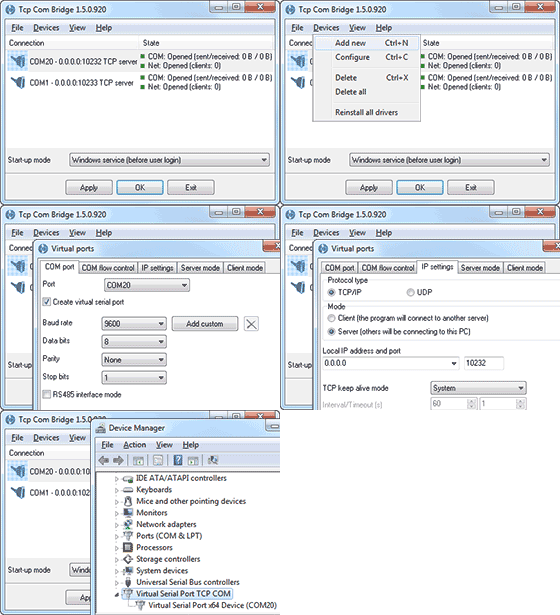
- Install and start the program, then choose Devices → Add new.
- On the Port tab select an existing COM port, or check Create virtual serial port and pick a free number such as COM20.
- On the IP settings tab choose Server and a port number on the computer that owns the device, or Client and the address of the server on the other computer. Click OK. The connection appears in the list with its state and byte counters. The step-by-step guides cover every setup.
Features
Virtual COM ports. Created and removed without a reboot. Other programs open them like hardware ports. In Device Manager they appear in their own group, "Virtual Serial Port TCP COM".
TCP server and TCP client. Each connection takes either role. A server accepts several clients at once. A client finds its server by IP address, domain name or computer name, which also covers dynamic IP addresses.
Up to 255 COM ports. Physical or virtual, on one computer. The Standard edition is limited to two connections; the Professional edition has no connection limit. Compare editions.
Serial port splitter. Several programs on one computer receive the data of one COM port. See the serial port splitter guide.
COM port sharing. Several computers use one device over the network. See sharing a COM port.
Windows service. The Professional edition starts as a service, creates the virtual ports and opens the connections before any user logs on.
Links that recover. Keep-alive checks notice a dead connection, the client reconnects, and data from the COM port can wait in a buffer while the network is down. "Open on demand" opens the real port only while a client is connected.
Access and direction control. A list of allowed IP addresses, a limit on the number of clients, and a switch for each direction, so clients can be read-only.
UDP. Datagrams instead of a connection, including multicast, in the Professional edition.
RS485 converters. An RS485 mode switches the RTS line during transmission for converters that need it.
Between two copies of the program. The Professional edition can pass the RTS and DTR state and the communication parameters of a virtual port to the remote hardware port, encrypt the traffic, and optimize the link for small packets and fast replies. These options need TCP COM Bridge on both ends.
Signed kernel driver. The driver for virtual serial ports carries an EV code signing signature that Windows trusts. It is tested with Microsoft Application Verifier on all modern Windows versions.
Choose your setup

- A COM-only program, the device on another computer or behind a device server. Create a virtual COM port that leads to an IP address: COM port redirector.
- A device on this PC must be reachable over TCP or UDP. Serve its COM port on a network port: serial to TCP/IP converter.
- Several programs on one PC need the same device. Serial port splitter.
- Several computers need the same device. Share a COM port over the network; for two cashiers and one receipt printer see printing from two computers.
- Many ports on one machine, running unattended. Serial device server.
- The program runs on a terminal server, the device sits on the operator's PC. COM ports and a terminal server; for slow receipts see receipt printing from remote accounting software.
- Two existing COM ports on one PC. Connect two COM ports locally.
New to the subject? Start with how serial over Ethernet works.
Tasks customers bring to us
From our support desk in the past year, with the customers' names left out:
- A race-timing program that can write only to COM ports sends its scoreboard data through a virtual COM port to a network service for live results, and to the physical scoreboards at the same time.
- The results of a laboratory analyser travel from the PC at the instrument to the laboratory software on another computer.
- One AIS receiver on a COM port feeds two navigation programs on the same PC.
- Warehouse scales on USB-to-serial adapters answer weight requests that a warehouse management system sends over TCP.
- A weighbridge scale is read from the office PC during the day and from an outdoor kiosk PC after hours.
- A navigation program on a laptop reads NMEA data from a Wi-Fi gateway through a virtual COM port.
- A utility with thousands of meters looks for a replacement for a discontinued port-sharing product on servers that share several hundred COM ports.
Editions and trial
The Standard edition allows two connections over TCP and runs as a desktop program. That covers one redirected port or two linked local ports; a split port takes three connections and therefore the Professional edition. The Professional edition has no connection limit and adds the Windows service mode, UDP, keep-alive packets, traffic encryption, remote control of the RTS and DTR lines and the command line. You can move from Standard to Professional later by paying the difference; the installed program stays the same.
The trial version works for 21 days with three connections; each work session is limited to 128 KB of data or 2 hours. A licence is needed for each computer that runs the program. Details: feature matrix, order page.
What it does not do
- It does not implement RFC 2217. It works with device servers in raw TCP mode.
- It does not convert protocols. Modbus RTU stays Modbus RTU inside the connection; for Modbus TCP clients use MODBUS Gateway.
- It does not create a pair of linked virtual ports on one computer. That is Virtual Null Modem.
- It does not show or record the traffic. Use Advanced Serial Port Monitor to look at it and Advanced Serial Data Logger to record it.
- It runs on Windows only. The other end of a raw TCP link can be any system.
Compared with other tools
Free tools such as com0com with hub4com, tcp2com or the single-port HW VSP3 are enough for some jobs, and a hardware device server is the right choice where no computer stands near the device. We keep two comparison pages current and say there where another tool fits better:
System requirements
- Windows 2000 and every later version up to the current Windows 11 and Windows Server releases, 32-bit and 64-bit.
- Administrator rights to install the program, because it installs a kernel driver for the virtual ports.
- Any COM port Windows can see: built-in, PCI or PCIe card, USB-to-serial adapter, Bluetooth serial port.
- About 5 MB of disk space.
Guides and reference
Setups: COM port redirector · serial to TCP/IP · splitter · sharing · device server · two local ports · installation
Remote desktop and POS: terminal server · slow receipt printing · one receipt printer, two computers
Reference: online help · user manual (PDF) · feature matrix · screenshots · version history · all tutorials
What's new
[May 15, 2026] A new version 1.8.3 build 515 of the TCP COM Bridge software is now available. We've fixed the "Message ID not found" software bug introduced in the previous version and polished translation for many languages.[April 10, 2026] TCP COM Bridge 1.8.2 build 410 has been released. We've made it possible to copy an existing configuration. It can help when setting up multiple connections on a server.
The full list is in the version history; the version and release date at the top of this page come from the current installer.
Frequently asked questions
Do I need TCP COM Bridge on both computers?
Only where a COM port has to be served or a virtual COM port has to be created. The other end can be any program or device that speaks raw TCP. The options on the Advanced tab (RTS and DTR state, communication parameters, encryption, extra keep-alive packets, small-packet optimization) work only between two copies of the program.
Will it work with my hardware device server or Wi-Fi gateway?
Yes, if the device offers a raw TCP port; most device servers call this TCP server mode or raw mode. Create a virtual COM port, choose Client and enter the address and port of the device. Set the baud rate in the device itself, because RFC 2217 is not supported. See the COM port redirector guide.
Is there a free version?
No. The trial works for 21 days with three connections, and each work session is limited to 128 KB or 2 hours. If a free tool is all you need, our comparison by situation names the ones we know.
How many ports can one computer handle?
Up to 255 COM ports, physical or virtual. The Standard edition is limited to two connections; the Professional edition has no connection limit.
Can several programs use one COM port at the same time?
Yes, through the serial port splitter setup. All programs receive the data. Let only one of them send commands, or make the other links one-way, because the device sees a single stream. On one computer the added delay is too small to measure. A split takes three connections, one for the real port and one per virtual port, so it needs the Professional edition.
Does a connection recover after a network failure?
Yes. The client reconnects by itself. With the keep-alive option of the Professional edition a dead link is noticed quickly, and data from the COM port can be kept in a buffer until the link is back.
Is it safe to use over the Internet?
Limit the server to a list of allowed IP addresses and forward only the one TCP port you use. The Professional edition can encrypt the traffic between two copies of the program with a proprietary algorithm; for sensitive data run the link through a VPN as well. The online help has a chapter on Internet links.
Does it run on Linux or macOS?
No, it is a Windows program. The other end of a link can run anything: ser2net on Linux, for example, serves a serial port as raw TCP, and TCP COM Bridge connects to it as a client.