
Redirect COM ports to a terminal Windows server
You can redirect a COM port on a Windows Terminal Server using built-in Windows functions. But a data transfer rate can be unexpectedly slow. For example, the server uses the same data transfer channel for a video stream. But you can install TCP COM Bridge and get a separate dedicated data transfer channel for COM ports and higher data transfer rates.
1. Install TCP COM Bridge (download) on a server and configure a connection as a TCP server with a newly created COM port (Main menu → Devices → Add).

Fig. 1. COM port
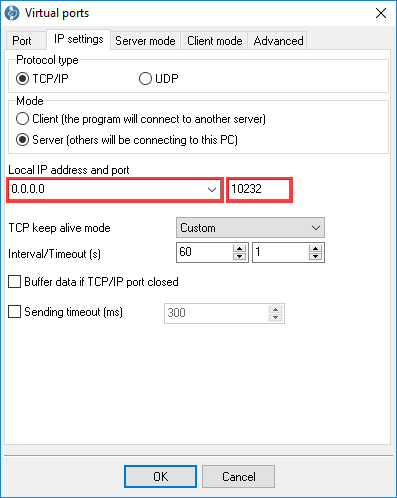
Fig. 2. Network connection
2. Do not forget to allow incoming connections in your server's firewall for the selected TCP port. If you transfer data through the Internet, configure your router too and redirect the same TCP port from the router to the server. If you connect multiple client computers to the same server, you should use a separate TCP port and virtual COM port for each client.
3. Configure TCP COM Bridge to start as a Windows service (Professional edition). The program will automatically start with Windows Terminal Server, create virtual COM ports, and accept connections from clients.

Fig. 3. Service mode on Windows Terminal Server
4. Install TCP COM Bridge on a client computer with a shareable COM port. Configure connection parameters with that COM port.

Fig. 4. Settings on the client computer
5. Configure the client part as a TCP client and specify the terminal server's IP address. When the client starts, it automatically establishes a connection with a server and starts redirecting COM port data.
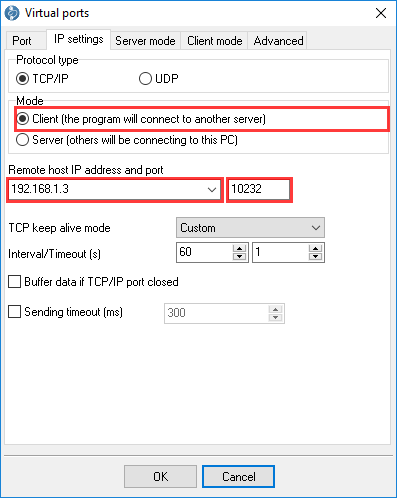
Fig. 5. Configuring network connection on a client
6. In this usage scenario, we recommend using the "keep-alive" option (Professional edition) on the client and server. If this option is enabled, the server or client can quickly detect and restore a broken connection.

Fig. 6. Keep-alive mode parameters
If the link is still slow
- Turn on "Optimize for small data packets and fast response" on the "Advanced" tab (fig. 6). It works only between two copies of TCP COM Bridge and must be set on the server and on the client.
- Measure the network delay: run ping from the client computer to the server. Devices that acknowledge every small packet, such as receipt printers and scales, need a response time under 50 ms.
- Windows XP and older systems may also need system-level tuning of TCP acknowledgements, for example with the free TCP Optimizer from speedguide.net. Reboot after the change.
Which edition do I need?
The terminal server needs the Professional edition: it runs as a Windows service and uses one connection for each client computer. A client computer with one redirected COM port can use the Standard edition. Choose the Professional edition for the client too if you want the additional keep-alive packets from step 6 there. Compare editions.
See also
Install TCP COM Bridge: setup, driver, first connection
Serial port splitter: one COM port for two or more programs
Serial device server: many COM ports on one Windows PC
Share a COM port over the network
COM port redirector: a virtual COM port to a TCP/IP address
Redirect COM ports to a terminal Windows server
Serial over Ethernet: how it works
Connect two COM ports on the same computer
Printing on one receipt, POS or fiscal printer from two computers
Fix slow receipt printing from remote accounting software
Serial to TCP/IP converter software
Best serial over Ethernet tools by situation
TCP COM Bridge vs tcp2com: when the free tool is enough
TCP COM Bridge troubleshooting
Related topics: TCP COM Bridge
hereSerial over Ethernet | Serial to TCP/IP converter | COM port redirector | Serial port splitter | COM port sharing | Serial device server | Serial port monitor | RS232 pinout and signals | Virtual Null Modem | COM Port Emulation